
Inkland<span data-metadata="">
App to book tattoo sessions online through verified profiles. User can also share their experience with the artist after attending a session instead of having to rely on the skills of an artist with whom they had never worked.


Designing with empathy
The app’s features were defined with this POV in mind, and aim to fulfill the following user needs: To see relevant work from qualified artists that are located close to where they live. To be able to book with confidence in the end result that the artists will provide.
"As a user I want to be able to see tattoo styles that interest me, close to where I am located and be sure that I will get a quality tattoo"
Understanding User Pain Points and Struggles
During our user interviews, we gained valuable insights into the needs and pain points of our users. We discovered that they prioritize the ability to view reviews of tattoo artists’ profiles and their previous work, along with clear images of how their tattoos healed over time. This information allowed us to empathize with our users and understand their expectations for the app. As a result, we were able to develop features that directly address their concerns and provide them with a more enjoyable and convenient user experience.
Define based on what we discovered:
The goal of this project is to create a mobile app that responds to the user POV:
“As a user, I want to see relevant work from qualified artists that are located close to where I live, and be able to book with confidence in the end result that they will provide.”
The app’s features were defined with this POV in mind, and aim to fulfill the following user needs:
To see relevant work from qualified artists that are located close to where they live.
To be able to book with confidence in the end result that the artists will provide.

To address these needs, the app's main features include:
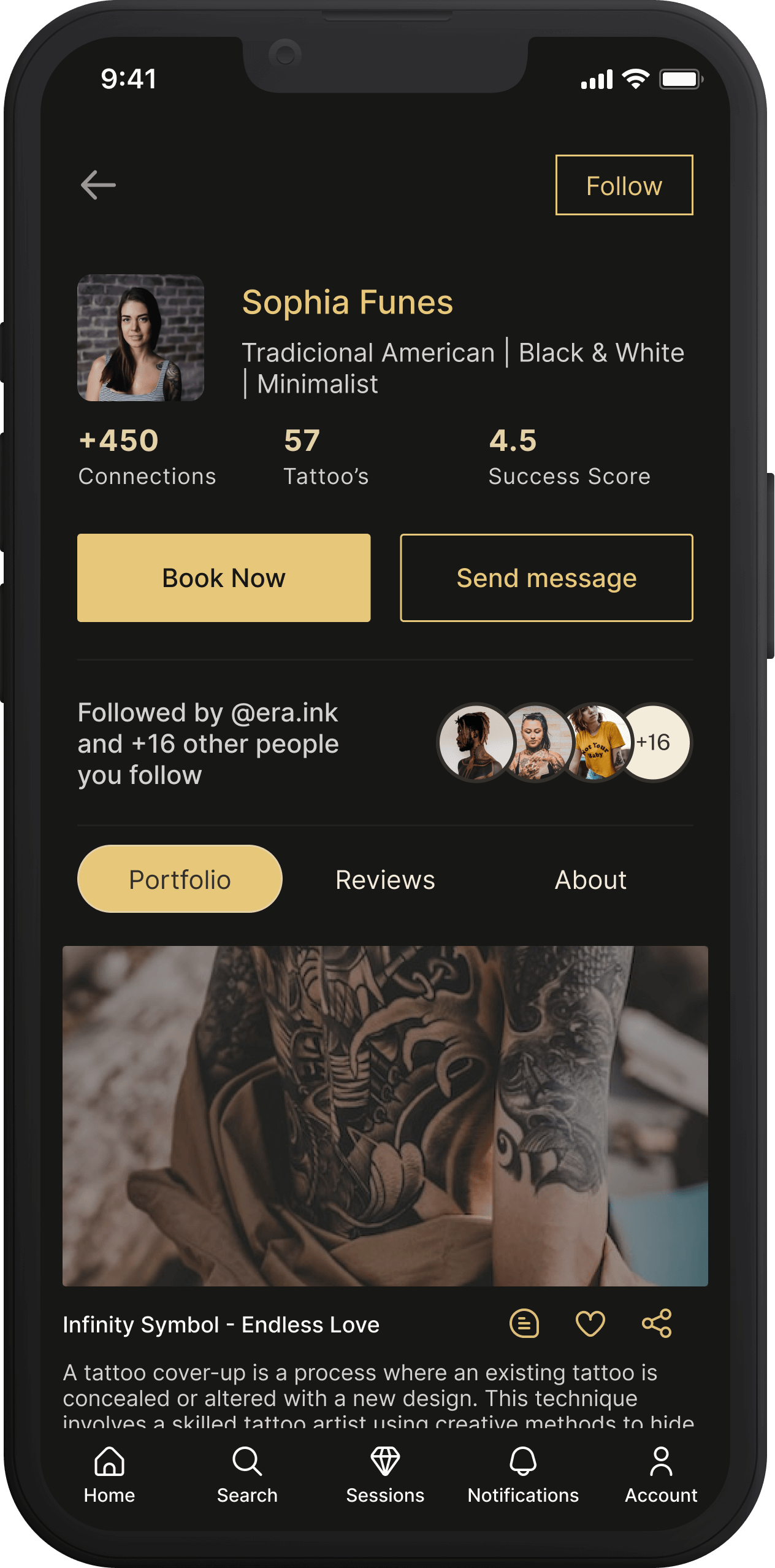
Profile feature: Allows artists to create a profile that showcases their work, experience, and reviews from previous clients. This feature fulfills the user’s need to see relevant work from qualified artists.
Home page: Provides an overview of the app’s features and recommendations for popular artists and styles. This feature makes it easy for users to find relevant work and artists based on their location and preferences.
Booking online experience: Enables users to book appointments with artists directly from their profiles, by selecting a date and time, specifying the desired tattoo design and location, and paying a deposit. This feature helps users to easily book with confidence in the end result that the artist will provide.
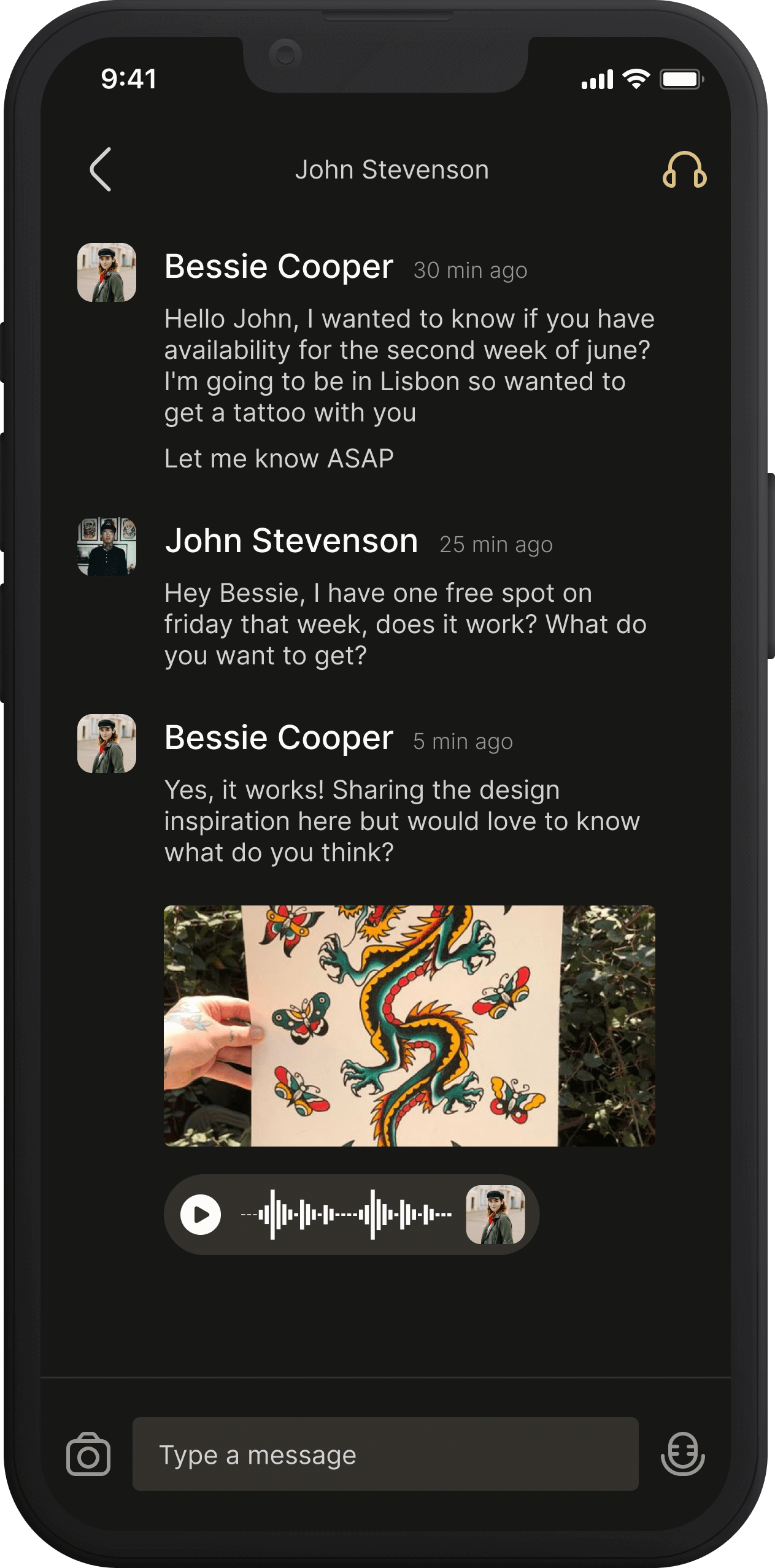
Chat feature: Facilitates communication between users and artists before and after the booking, to discuss the details of the tattoo design, ask questions, and share images or references. This feature helps users to feel confident in the end result of the tattoo, by enabling them to communicate their needs and preferences to the artist.
Search feature: Allows users to search for artists based on various criteria, such as location, style, price, availability, and rating. The search results are displayed in a list or map view, with filters and sorting options. This feature helps users to find relevant artists based on their location and preferences.
All these features were designed based on the user POV, with a focus on usability, reliability, and security. The MVP for the app includes these features, and will be developed for iOS and Android platforms, with a responsive design that adapts to different screen sizes and orientations. The app will also integrate with external services, such as payment gateways and location services, to provide a seamless user experience.

Ideation
Through a collaborative “Crazy 8” brainstorming session, we were able to generate a range of ideas and evaluate them based on their respective advantages and disadvantages. Using this process, we identified the most promising concepts and leveraged them to create a preliminary version of the application. This allowed us to quickly prototype and test the application, while incorporating feedback from users and stakeholders along the way.
Iteration and validation
Following user testing on the prototype, we discovered that the Cover feature in user profiles was irrelevant to users and prevented them from accessing important content on the mobile screen. Users prioritized being able to view an artist’s work and reviews, making them the key features that mattered most.
Based on user feedback, we removed the search feature from the home page and made it accessible through the navigation bar instead. We also identified the need for improved filtering options and a more intuitive layout to help users easily find tattoo styles that interest them.
Through our testing, we were able to establish a clear information architecture that users need to navigate the app successfully. This includes filters, profiles, artist works, location-based search, and suggestions for new artists based on preferred styles.
Users expressed a strong desire for easy filtering and navigation when exploring artist profiles and discovering new tattoo styles. They also emphasized the importance of being able to view an artist’s work while simultaneously returning to the main navigation. Additionally, users wanted to be presented with new tattoos and artists that might interest them based on their preferred styles and location.
Conclusion
Our iterative design process allowed us to create a thoroughly validated experience that aligns with user expectations for getting tattooed by a new artist. Through multiple rounds of user testing, we were able to fine-tune the app’s features and functionality to ensure that users feel confident and comfortable when selecting an artist and getting a tattoo. As a result, our validated design provides a seamless and enjoyable user experience that meets the needs and expectations of our target audience.