Healthy Way
Eating healthy has never been so simple. Now with Healthy Way you can receive recipes and ingredients directly at home.
The approach: Design Sprint
In an increasingly busy world, finding time to shop for healthy ingredients and prepare nutritious meals can be a challenge. Healthy Way, a meal delivery service, aimed to address this challenge by providing pre-portioned ingredients and recipes to customers’ doors. To ensure that the concept would meet the needs of potential customers, Healthy Way engaged in a design sprint process to test and refine their idea. Over the course of a week, a cross-functional team worked together to prototype, test, and iterate on the Healthy Way concept. Through user research, prototyping, and user testing, the team was able to gain a deeper understanding of their target audience’s needs and preferences, refine their solution, and ultimately launch a successful product. In this case study, we will explore the design sprint process that Healthy Way used to develop their meal delivery service and the key insights that led to the service’s success.
“"As a busy individual looking for convenient and healthy meal options, I want to be able to easily access and follow recipes, receive pre-portioned ingredients, and have them delivered to my door, so that I can save time and enjoy nutritious meals without the hassle of grocery shopping and meal planning.”
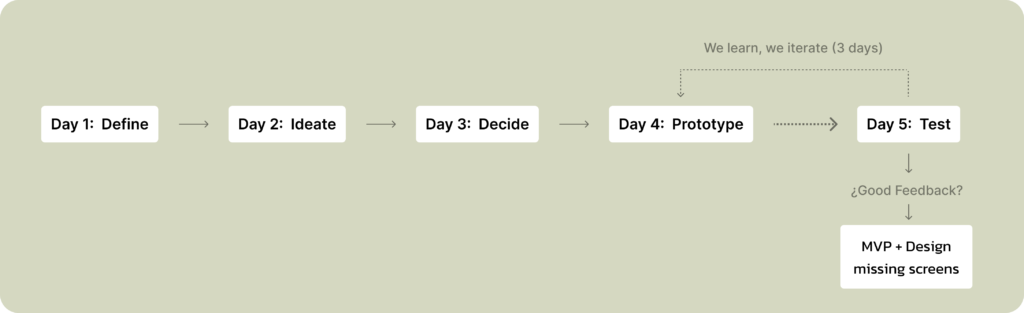
Define
On day one of our design sprint, we kicked things off by conducting an interview with our experts. We had the pleasure of hearing from the client, UX UI designer, and front-end programmer, and were able to gather valuable insights regarding our sprint questions, long-term goals, and key notes. The client had 20 minutes to share their perspective, while the other participants had 10 minutes each.
Next, we moved on to the important task of identifying our sprint goals and questions. This exercise required us to envision how we see ourselves in the future while also considering potential obstacles that could arise during the project.
Lastly, we created a user map to guide our design process. We focused on the end goals of the user and the critical steps in their experience to ensure we create a product that meets their needs. By the end of day one, we were well on our way to a successful design sprint.


Ideation
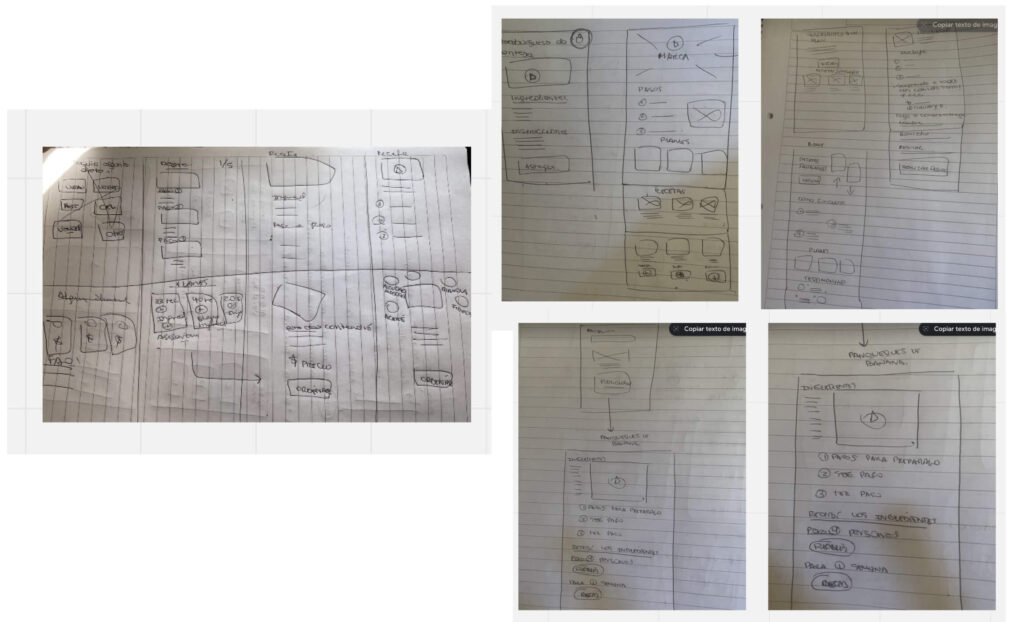
On day 2 of our design sprint, we started with quick demos, where the team focused on finding inspiration for the project. We searched for examples from various industries, not just the same niche, to broaden our creative thinking. The aim was to think outside the box and generate innovative ideas that could elevate our project.
Next, we moved on to ideation in 4 steps. First, we reviewed our notes from the previous day to ensure everyone was on the same page. Then, we started the idea generation process, encouraging all team members to contribute and brainstorm as many ideas as possible. We then followed that up with the Crazy 8 exercise, where we challenged ourselves to generate eight ideas in eight minutes. Finally, we sketched the final solution to help visualize the concepts generated during the ideation process. By the end of day 2, we had a plethora of creative ideas and were well on our way to developing an outstanding solution.

Decide:
On day 3 of our design sprint, we started with the definition and decision activity. The facilitator presented each idea generated during the ideation process and used heat map votes to determine which ideas should be given more relevance and focus. During this process, anyone on the team could suggest answers or ask questions for clarification.
Next, we moved on to the storyboard activity. The ideas that were voted by the decision maker were selected for this step. We created a step-by-step cartoon of the screens that make up these ideas. Before creating the storyboard, we created a user test flow to visualize the route the user would take based on the selected ideas. This helped us ensure that our storyboard was aligned with the user’s needs and experience.
By the end of day 3, we had a solid understanding of the most promising ideas and had started visualizing our solution through storyboarding. We were making great progress and were excited to move forward with the project.


Prototype
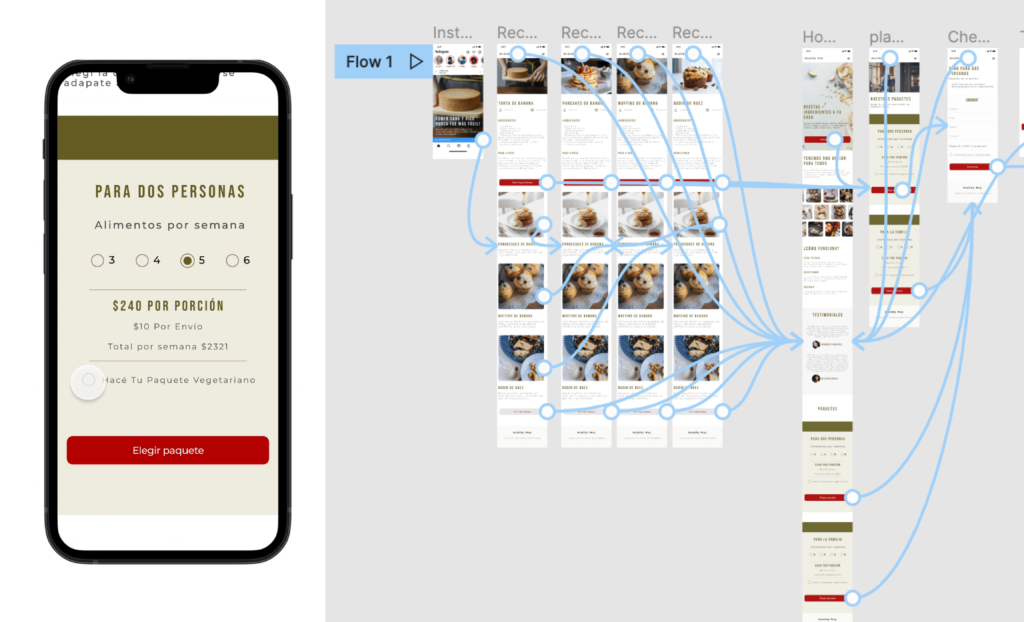
On day 4 of our design sprint, we dedicated ourselves to creating a high-fidelity prototype to test our product idea. With the user test flow and storyboard as a guide, we worked diligently to create a polished and realistic prototype that accurately represented our solution.
During the creation of the prototype, we paid close attention to the details and made sure that the prototype was visually appealing and easy to use. We wanted to ensure that our product idea was fully realized and could be presented to potential users for feedback.
By the end of day 4, we had created a high-fidelity prototype that we were proud of and eager to test with users. We felt confident that we had a strong product idea that would resonate with our target audience and were excited to move forward to the testing phase.
Testing
On day 5 of our design sprint, we conducted usability tests to test our high-fidelity prototype and validate our product idea.
We interviewed a total of five users for this opportunity, one of them in person and the other four remotely.
During the usability tests, we observed how users interacted with the prototype and listened to their feedback. We asked questions and took notes to gain a better understanding of what was working well and what needed improvement.
By the end of the usability tests, we had valuable feedback from real users that helped us identify areas for improvement and validate our product idea. We were able to make necessary changes to the prototype based on the feedback received, which helped us refine our solution and better meet the needs of our target audience.
Overall, the usability testing phase was a critical step in our design sprint, and we were grateful for the opportunity to gather feedback from real users. With this feedback, we felt confident that we had a strong product idea that was well-suited for our target audience.
How could we generate the idea so that it is irresistible for our users and they do not feel like they are on a diet?
Through variety in packages and recipes offered to users. Generating value with packages delivered to their homes that save them time and effort in buying the ingredients and they don’t have to think about what to cook.
How could we generate so much value that even if we fail to compete with supermarkets, users are still interested in our value proposition?
Through packages that respond to the needs of our users who usually have little time to take care of their health. Bet on quality and the experience that Healthy Way offers by sending the ingredients directly to your home.

Report and Conclusion:
The users understood the general idea, the proposal caught their attention and they thought it responded well to their needs. However, the prototype showed that it needs an iteration to explain the packages in more detail, as users did not understand what was included and how they were going to choose the recipes. The proposal shows promise. But it is not recommended to go directly to building a Minimum Viable Product from the current prototype.
Finally, the next step is to iterate on the prototype, incorporating the feedback received from users and striving to better communicate the proposal. This new prototype must be tested with 5 new users to receive new feedback. Based on the new comments received, a decision would be made to continue with the construction of the Minimum Viable Product or to make further modifications. Thanks for reading! 🥳